Be Greedy When Others Are Fearful, Buy This 6% Dividend Champion With Me

I think most investors and analysts are bearish when it comes to Tanger Factory Outlet Centers (SKT). Seeking Alpha happens to have a group of analysts who don’t share this majority view. I wrote an article on the dividend champion selling at an insane discount. I’ve been asked numerous questions since the article, so let me answer some of them for you. But before we start, check out SKT trading at more… of a discount:
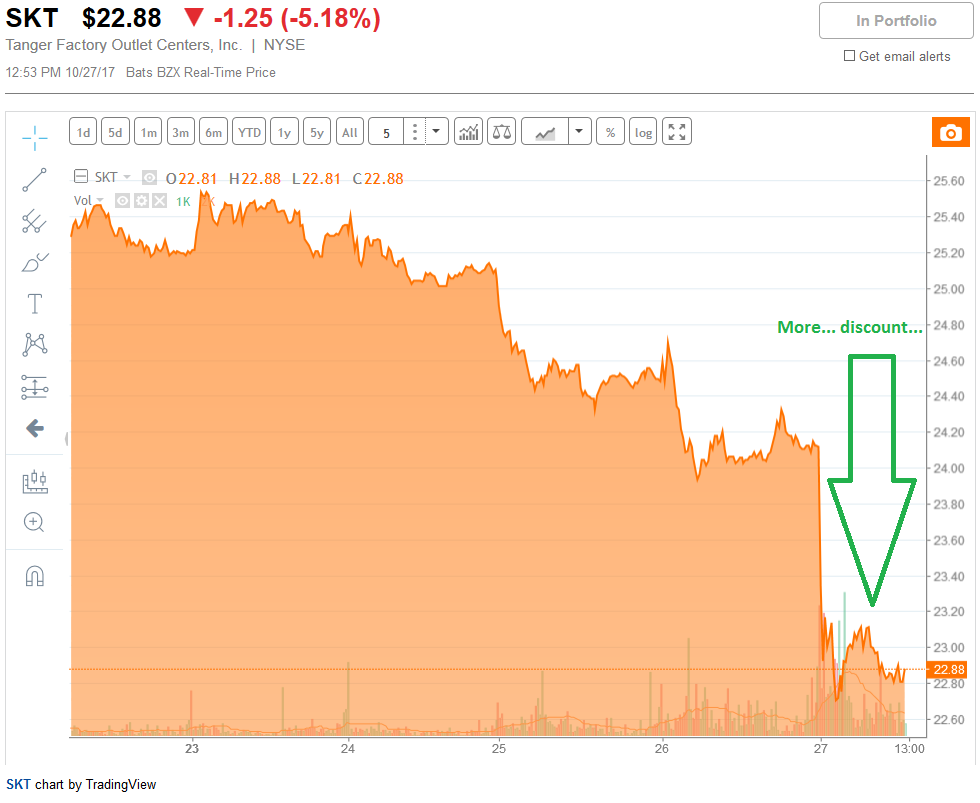
I love a discount. I added to my position this morning.

The market is stricken with fear. Zombies have taken over mall REITs. Mall REITs are no longer inhabitable and will soon cease to exist. I may have embellished on why the market is stricken with fear. However, the market is pricing mall REITs at insanely low prices. My main coverage is on mortgage REITs and equity REITs. When it comes to mortgage REITs, the sector is overpriced (started to come down after Q3 2017 earnings releases). When it comes to equity REITs, there are enormous discounts for mall/shopping REITs. Let that sink in for a moment. While you’re thinking, recall this quote:
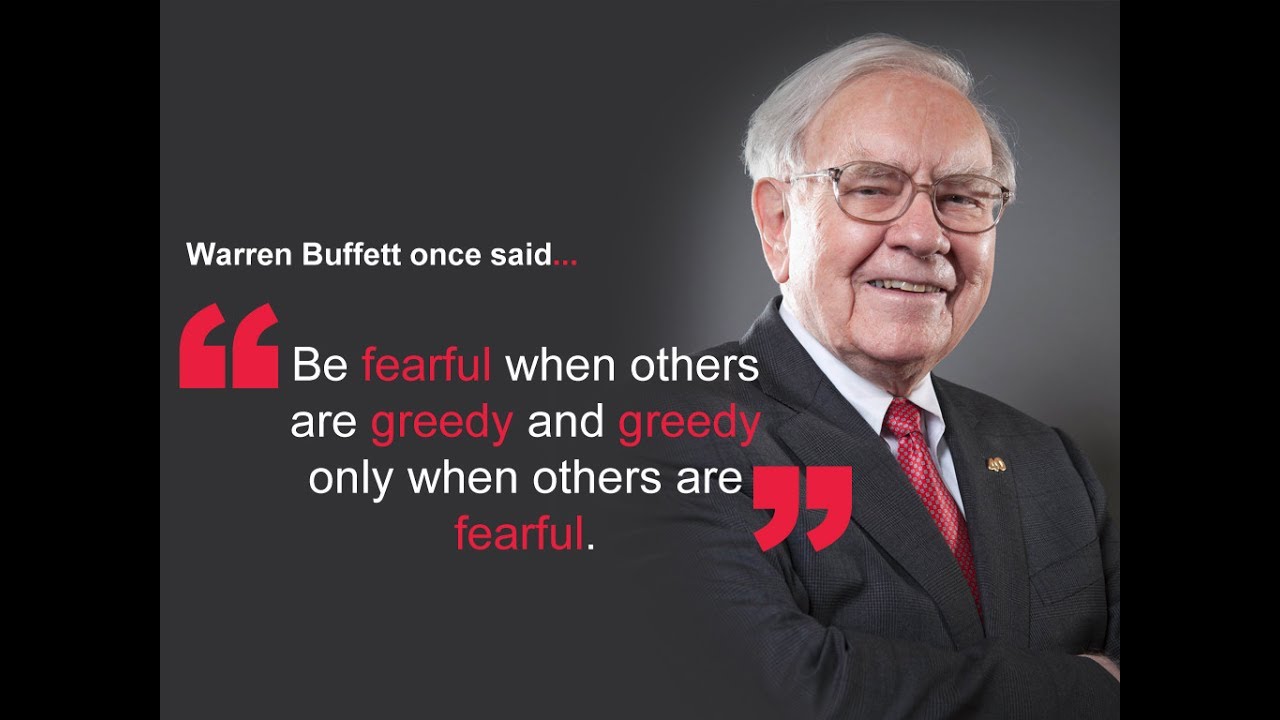
Instead of using this logic, we are seeing something else entirely. Analysts are noticing some equity REITs surrounded by fear and then looking for information to defend their“analysis”. Which in turn, perpetuates the fear that mall REITs are going to somehow cease existing.

Why the recent price drop

The “Amazon (AMZN) effect” is weighing on mall REITs. Amazon smashed estimates. Amazon beat on earnings and thoroughly beat on revenues. The growth was heavily influenced by Amazon Web Services and Whole Foods Market. That’s ironic. Amazon saw a strong quarter by owning physical retail stores.

Another factor was J.C. Penney (JCP) slashing their outlook. The company adjusted guidance for the year. For the year, guidance for EPS is now $ 0.02 to $ 0.08 instead of $ 0.40 to $ 0.65. After the news, JCP went down 21%.

These two factors led the market to drop prices on mall REITs. Perhaps, the big question is what are REITs to do about JCP going down? The answer is simple: replace them.

SKT is already done with that job. They finished it early by simply not having any JCP stores. From the Q2 earnings call:

“Teavana is the latest to announce closing and we have no Teavana locations in our Tanger portfolio. We also have no Sears, K-Mart, JC Penney, hhgregg, or GameStop stores.”

Why SKT is a buy today

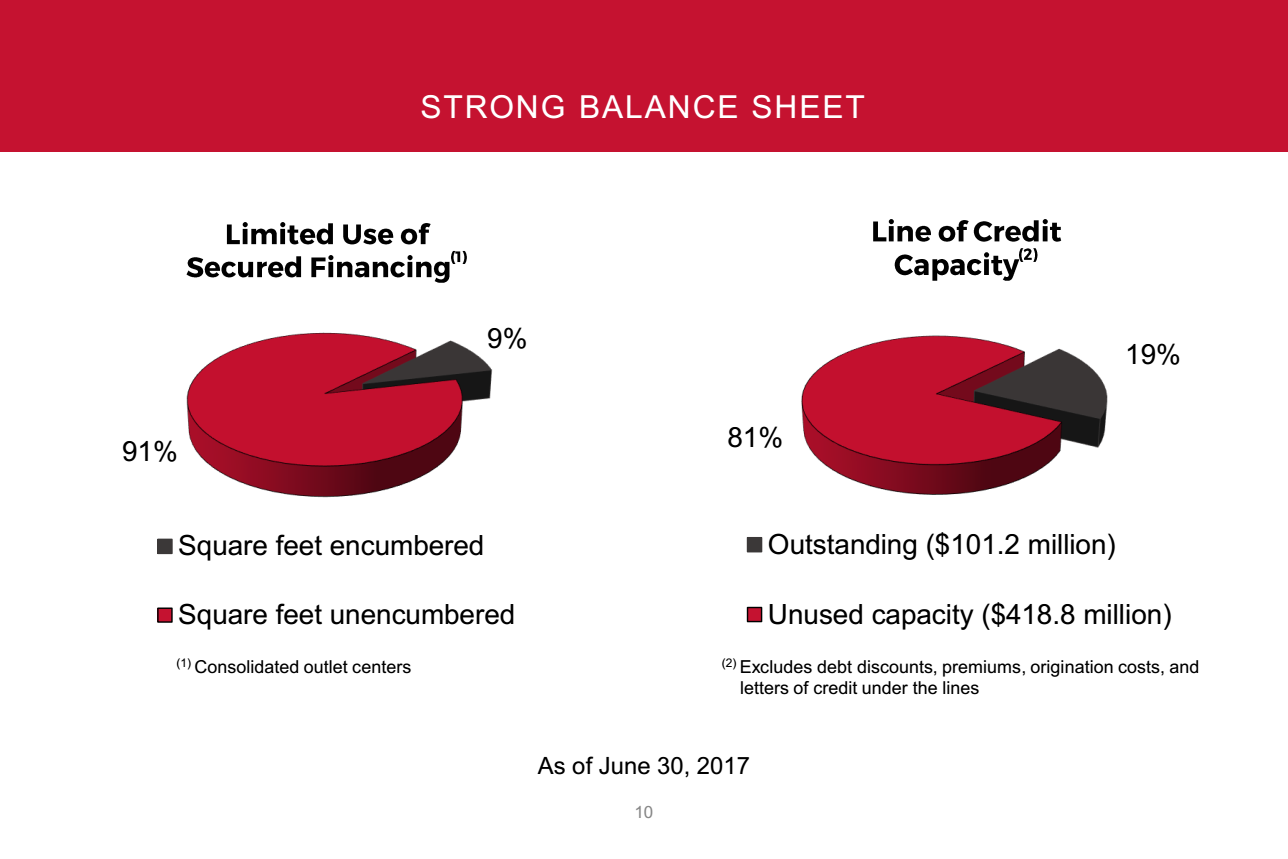
SKT is trading at a mere 9.5x AFFO guidance for the year. SKT maintains a conservative balance sheet which prevents them from having any difficulty with their debts.
The dividend yield is nearly 6% and is easily covered by AFFO. The excess AFFO is available for reinvesting into the portfolio or repurchasing shares.
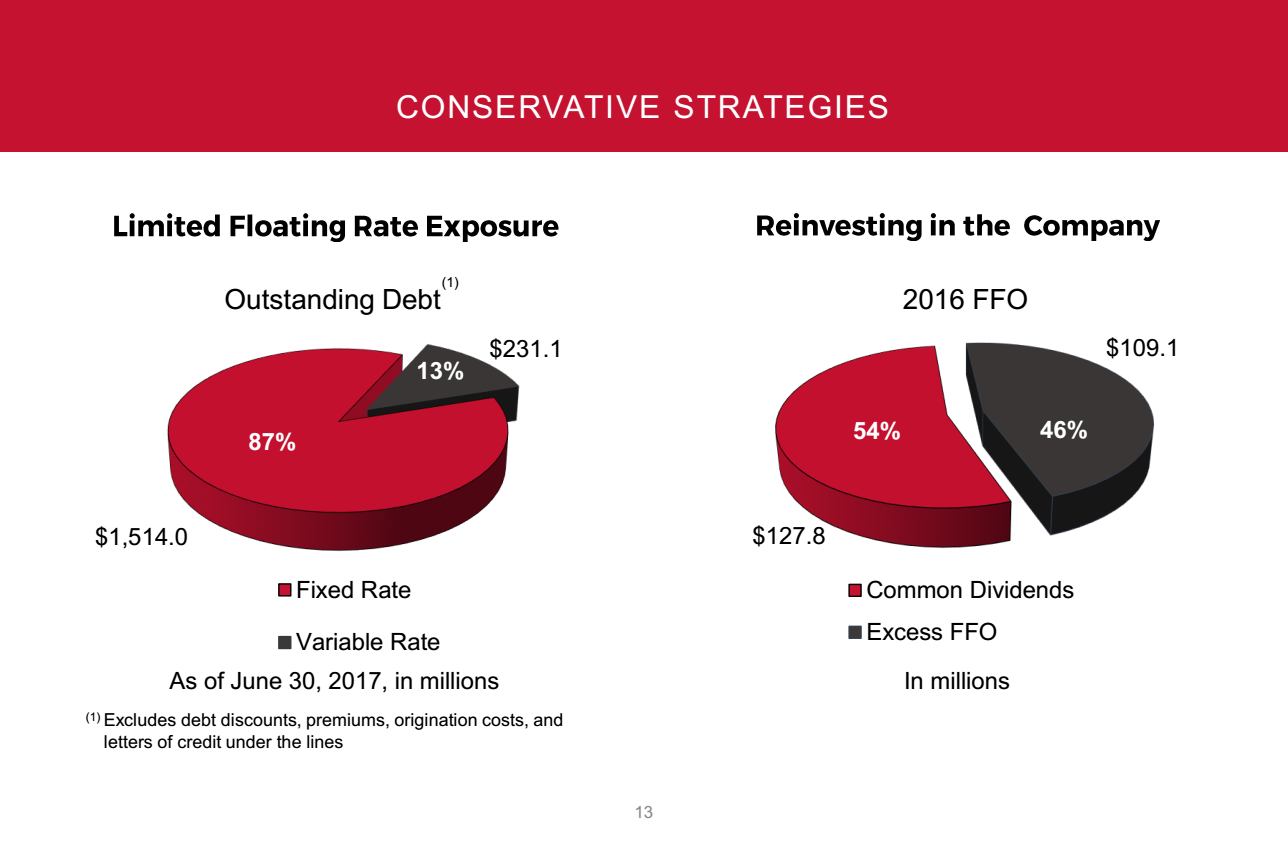
In the second quarter, management was actively buying back stock because it is immediately accretive to AFFO per share. SKT has a couple new properties opening up which should increase net operating income and AFFO per share.

Following those openings, SKT has relatively few capital expenditures coming up over the next couple of years. This makes it easier for them to grow the dividend and gives them the option of repurchasing stock faster than most REITs.

Serious problem

SKT offers both FFO and AFFO for investors. It’s even in their presentations:
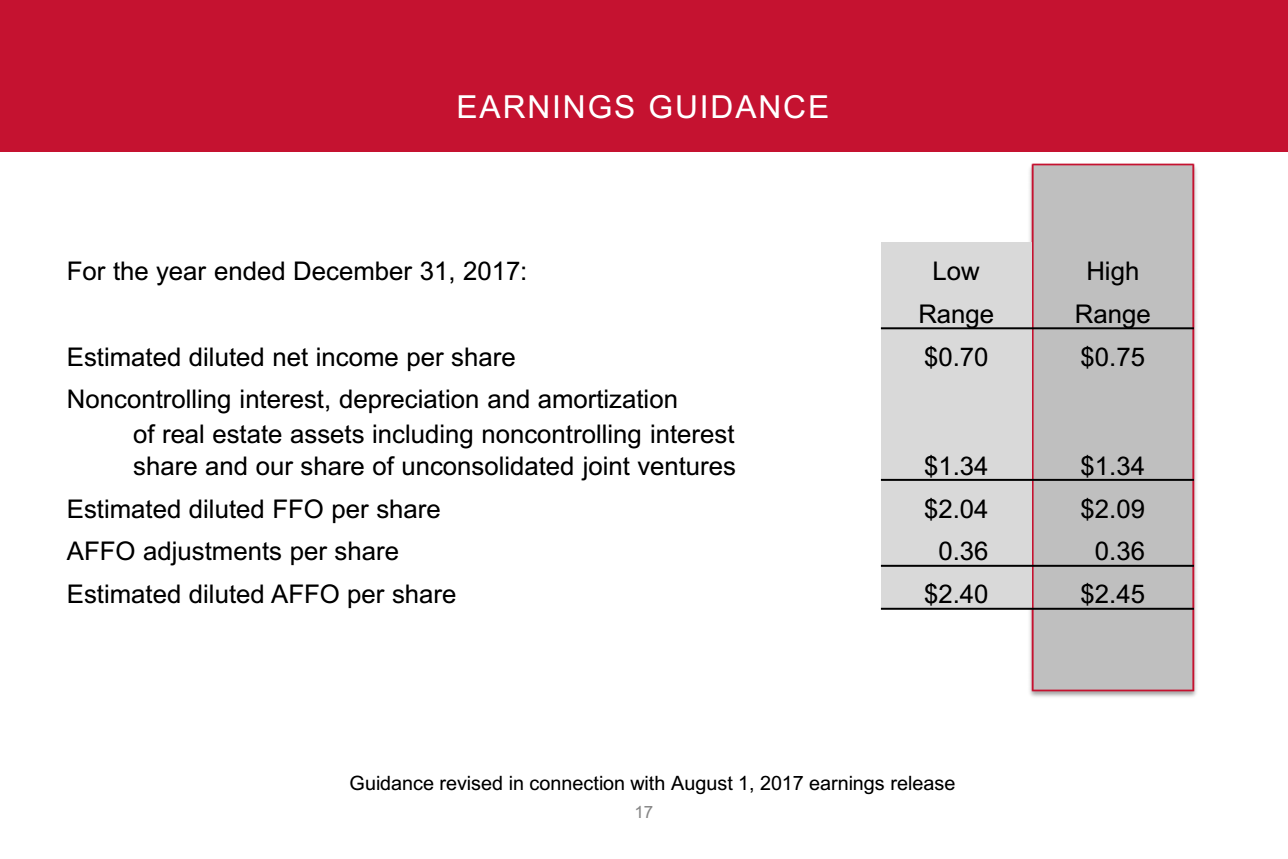
One issue is that websites offer inaccurate information. For analysts who are trying to figure out mortgage REITs and equity REITs, this can be a serious problem.

I’ve taken a look at the sites which give out FFO and AFFO numbers in the REIT sector. They are often inaccurate. The test is rather simple. Investors should check the websites calculations to verify that they are accurate. When you do this test and find the numbers don’t match, dig deeper. Check the numbers against the press releases for Realty Income (O), National Retail Properties (NNN), and a few other large REITs. If you find frequent contradictions, that’s a problem. Make sure to insert mall REITs, such as Macerich (MAC), as well since they have more complicated statements due to the impact of JVs.

JVs (joint ventures)

In my view, GAAP creates the problem by not forcing standardized reporting of JV interests on a pro-rata basis.

Joint ventures can obfuscate what’s really going on. For instance, NNN is top notch for transparency and accounting quality. It starts to get mixed up when the company has major positions in JVs. Proportional consolidation would fix the problem, but we usually get “one line consolidation” which makes the statements ugly. Assuming the company owns positions in unconsolidated JVs, the depreciation related to those positions does not show up directly in any of the financial statements. To find it, you would need to look for a reconciliation on FFO or NOI. Quite simply, it wouldn’t be possible to correctly automate FFO in these situations unless the tool could pull data that is not in the income statement, balance sheet, cash flows, or changes in shareholder’s equity.

This is one of the reasons I find JV accounting so annoying. I really wanted a tool that would work, but without a standardized method that requires all JVs to be reported the same way, it can’t happen. When we go to AFFO, it is critical for an analyst to use judgment on which adjustments are reasonable. I agree with most of the major REITs, but a few of the smaller ones created silly adjusted metrics that were just useless.

Suggestion

When looking through a third party’s statements on a company, I suggest checking the actual company’s press release for each quarter.

I think SKT is still at attractive prices and the same goes for Simon Property Group (SPG). I would be interested in buying some MAC, but the price came back up materially over the last few weeks. I would prefer to align my portfolio more defensively given the high valuation on domestic equity markets. Credit spreads on rated bonds are also absurdly thin. The entire situation encourages me to be more defensive. However, I see quite a few Mall REITs trading around 30% to 70% of their net asset value per share. Some of those REITs are running high quality properties. I wouldn’t mind being part of a group purchasing the physical real estate. The stock price will fluctuate much more, but I get great liquidity and a huge discount on buying in.

Reconciliations and adjustments can be confusing

I’ve become accustomed to spinning through reconciliations and knowing what adjustments to keep or throw out. It took a while and a significant amount of time spent looking through both good and bad REITs to reach a conclusion. In my opinion, if you want to see an example of where lots of adjustments are garbage, look at Wheeler (WHLR). If you go back in time to Q2 2016, the Resource Capital Corporation (RSO) adjustments under old management were hilarious since it was an mREIT trying to use equity REIT adjustments. RSO’s adjustments under new management are reasonable.

O and NNN are always great. SPG is very high quality for a mall REIT while attempting to tackle the JV issue, but they have JVs and own a huge stake in a European mall REIT.

Final thoughts

Mall REITs have become out of favor. The current prices aren’t built around fundamentals or guidance. The prices are built around fear of malls dying. They will not die. The space the malls currently own definitely will not die. Whatever the better malls transition into will continue to use the space they own. I’m going to stake my money against the market’s fear by owning several mall REITs. I started buying in earlier this summer and will be adding more as I find great values. Often it is great values on great companies.

I do believe the sector is largely undervalued. However, I would not invest using an index. I have enough capital to diversify and can research each stock separately to ensure I am buying exactly what I want at the price I want to pay. Using an index works for investors who want the extra diversification, but for the ideal entry price, I would much rather pick individually.

If prices keep going down, I have the capital and stomach to buy more. Remember, when others are fearful… perhaps it is time to be greedy.

Click The REIT Forum to sign up for:

  • Actionable buy and sell target prices
  • Best research on preferred shares and REITs
  • Best reviews on the site – 294/295 stars
  • Stable dividend yields over 7%
  • You get instant actionable SMS alerts
  • Sign up before November 1st, 2017 to lock in at $ 370/year

Disclosure: I am/we are long SPG, SKT.

I wrote this article myself, and it expresses my own opinions. I am not receiving compensation for it (other than from Seeking Alpha). I have no business relationship with any company whose stock is mentioned in this article.

Additional disclosure: No financial advice. Investors are expected to do their own due diligence and consult with a professional who knows their objectives and constraints. CWMF actively trades in preferred shares and may buy or sell anything in the sector without prior notice. Tipranks: Buy SKT.

Editor’s Note: This article covers one or more stocks trading at less than $ 1 per share and/or with less than a $ 100 million market cap. Please be aware of the risks associated with these stocks.

Tech
General Electric: Can You Handle Another Dividend Cut?

Investment Thesis

How about we start with this line from John Flannery, Chairman and CEO of General Electric (GE):

“This was a very challenging quarter.”

Or as I would translate this to my 12-year-old:

“I have another pile of excuses to share with you.”

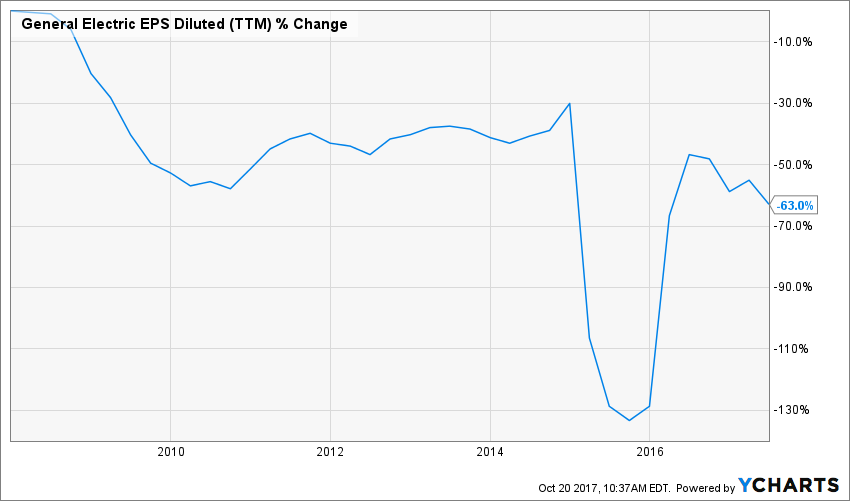
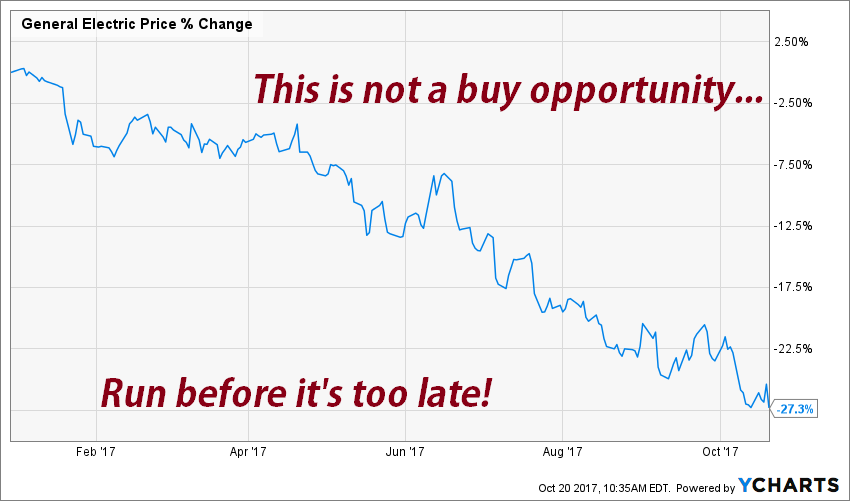
In February, I told you that GE would fail you if you keep it in your portfolio. Many of you didn’t listen and told me that they were happy to keep shares they bought around $ 9 while they were in their $ 30s at the time of my first article. Now fast forward today, the stock keeps going lower and lower and now trades around $ 23 after GE missed expectations (again) with their Q3 2017.

Source: Ycharts

GE stock is seriously underperforming the market. Imagine if we were in a bear market. The company struggles to structure its business and find growth vectors. Many divisions show sales slowdown, notably its oil segment which will continue to hurt in the coming years.

The company is in cost control mode with expectations to cut $ 2 billion in expenses. You will discover in this analysis that while management must cut the fat, there might not be room for dividends in the future anymore. Are you ready to swallow another dividend cut?

Understanding the Business

General Electric is a 100-year-old company offering various digital industrial products. Over the past few years, the company has realigned all its business segments toward powering the industrial internet with its software experience. GE has purchased Baker Hughes and Alstom in the past couple of years in hopes of generating growth. Unfortunately, management keeps telling investors to remain patient. Can you afford to continue to be patient?

The company counts eight divisions among its “GE Store”” Power – combustion science and services, installed base; Energy connections -electrification, controls and power conversion technology; Renewable energy – sustainable power systems and storage; Oil and Gas – services and technology; Transportation – engine technology and localization in growth regions; Lighting – LED bulbs; Healthcare – diagnostics technology; Aviation – advanced materials, manufacturing and engineering products.

Earnings

Source: Ycharts

The company got rid of GE capital which was responsible for most of its problems back in 2008 (where they implemented a dividend cut). As financials are rising, GE counts on a slow growing industrial division to replace GE capital’s once profitable business.

As Trian (a multi-billion dollar asset management company) is taking more control of GE’s board, you can expect additional cuts in costs and short cuts to short-term profits. As Nelson Peltz (Trian founder) is bullying his way through Procter & Gamble (PG) to do the same, another founder Edward Garden is doing it at GE. I prefer to stay away from this kind of battle as a dividend growth investor.

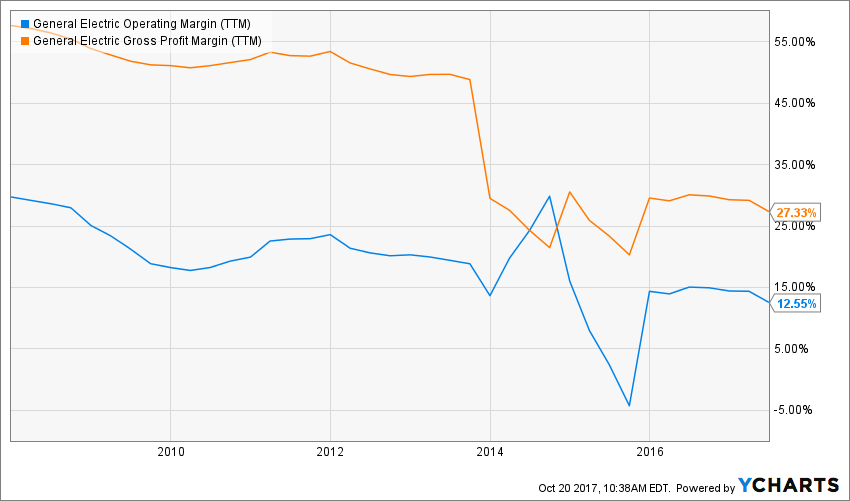
Source: Ycharts

When you look at GE’s margins, I can’t blame Trian to raise the flag and ask for action before it’s too late. But as management cuts their budget and tries to align their company on the right track, I fear these actions will put the dividend in jeopardy… again.

Dividend Growth Perspective

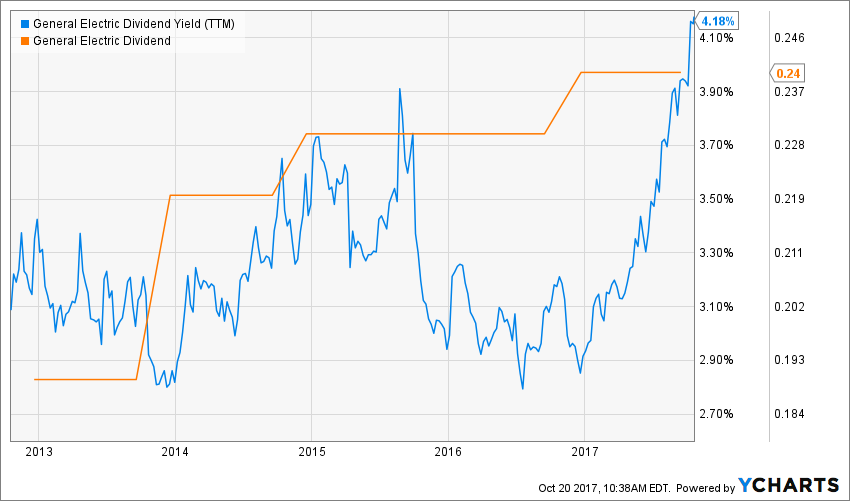
Source: Ycharts

The dividend was cut eight years ago, and the company has not yet returned to those payout levels. The dividend growth looks interesting over the past five years. After all, this iconic company managed to increase its dividend by a 4.78% annualized growth rate over this period of great modifications. Even better, the latest stock price plunge opens the door to income seekers with a juicy dividend yield over 4%.

Well, my friend, think again…

The company’s current payout ratio seems out of control with a 112% ratio. However, it gets worse when we use the cash payout ratio. We can see the company is bleeding cash at the moment. Remember, the payout ratio is a good indicator of a company’s ability to sustain its dividend, but it remains based on accounting numbers, not real cash. I don’t see how the company will continue to raise its dividends in such a situation.

Potential Downsides

As you can tell by now, I’m quite bearish on GE. I think that if the oil industry doesn’t shift toward a bullish mood any time soon, GE will have no other choice but to stop increasing its dividend. Eventually, this could lead to a dividend cut. Look again at the payout ratio, this situation is unsustainable.

What used to be a great investment after GE cut a deal with Buffett isn’t that great anymore. At best, GE will hover in the $ 20s for a decade, leaving you behind the market and other great dividend growth stocks such as Honeywell (HON).

Valuation

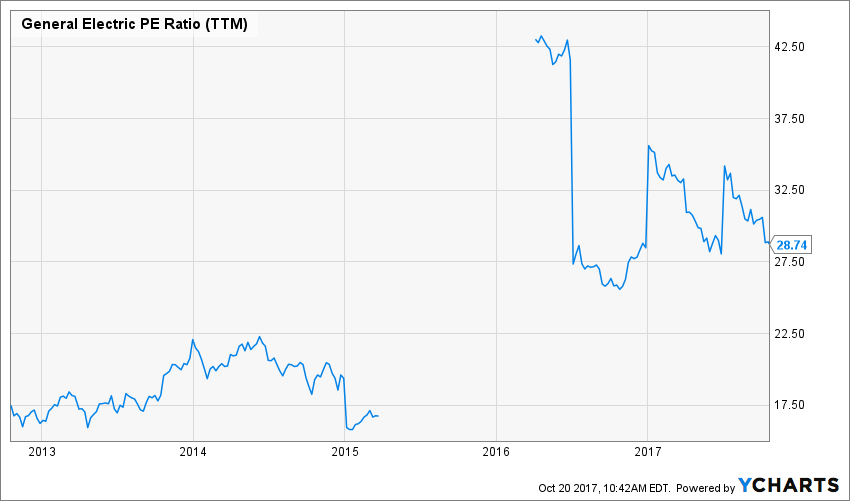
You may think that after a nearly 30% drop this year, GE stock would be on sale. You will be surprised to realize it is still trading at a 28 PE ratio. This is a very high PE for a company that is not growing.

Source: Ycharts

Please note the forward PE ratio is now at 15, leaving hope for the most optimistic investors. However, when I use the dividend discount model to determine a fair value, I can only see that GE doesn’t pay me enough, even with a 4% yield.

Input Descriptions for 15-Cell Matrix

INPUTS

Enter Recent Annual Dividend Payment:

$ 0.96

Enter Expected Dividend Growth Rate Years 1-10:

3.00%

Enter Expected Terminal Dividend Growth Rate:

5.00%

Enter Discount Rate:

10.00%

Discount Rate (Horizontal)

Margin of Safety

9.00%

10.00%

11.00%

20% Premium

$ 25.72

$ 20.70

$ 17.35

10% Premium

$ 23.57

$ 18.98

$ 15.91

Intrinsic Value

$ 21.43

$ 17.25

$ 14.46

10% Discount

$ 19.29

$ 15.53

$ 13.02

20% Discount

$ 17.14

$ 13.80

$ 11.57

Please read the Dividend Discount Model limitations to fully understand my calculations.

As you can see, GE stock is nowhere near its “fair dividend value.” I’m not saying GE will drop to $ 17 within the next 12 months. But I’m saying that GE will not pay you enough to compensate for the risk you are taking. Let it go.

Final Thought

While you are happy with your paper profit, keep in mind that this virtual money is shrinking fast while the market keeps going up. You are missing out on an opportunity cost here. Maybe it’s time to cash in your profit and look at other opportunities.

Disclaimer: I do not hold GE in my DividendStocksRock portfolios.

I’m long HON.

If you like my analysis, click on FOLLOW at the top of the article near my name. That will allow my articles to display on your homepage as they are published.

Additional disclosure: The opinions and the strategies of the author are not intended to ever be a recommendation to buy or sell a security. The strategy the author uses has worked for him and it is for you to decide if it could benefit your financial future. Please remember to do your own research and know your risk tolerance.

Disclosure: I am/we are long HON.

I wrote this article myself, and it expresses my own opinions. I am not receiving compensation for it (other than from Seeking Alpha). I have no business relationship with any company whose stock is mentioned in this article.

Tech

A Legendary Dividend Growth Stock Trading At Fire Sale Prices

As a contrarian value dividend growth investor, I know the best time to buy a high-quality company is when Wall Street thinks it’s broken.

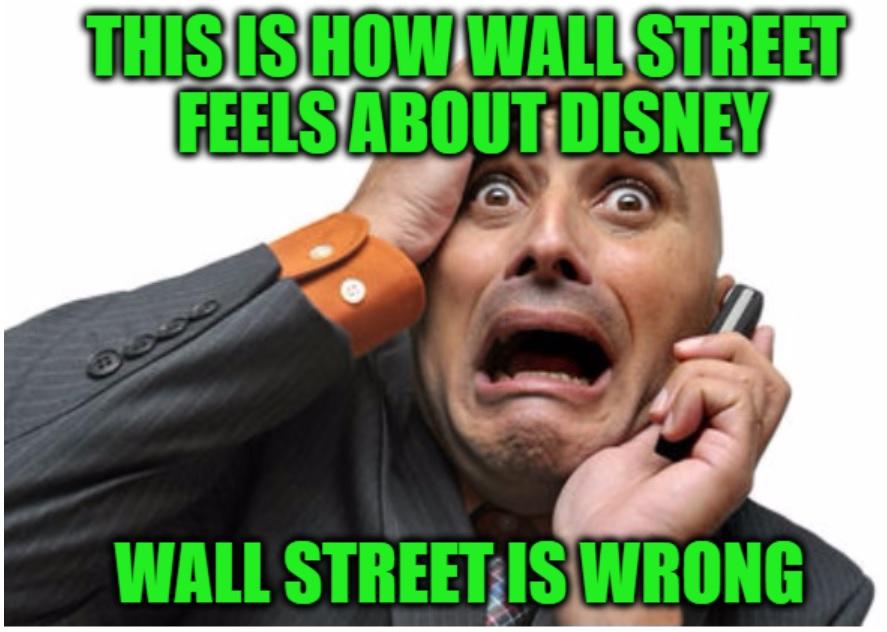
After careful research, I’ve come to the conclusion that this is how the market feels about Disney (DIS). However, as with most such situations, the market’s short-term focus is blinding it to the company’s likely bright dividend growth future.

That’s why I’ve recently added this legendary entertainment conglomerate to my real money EDDGE 3.0 portfolio, and think you should consider doing the same.

This Is Why Wall Street Is Worried

The key to contrarian value investing is to understand why the market is down on a stock, and to determine whether this is a growth thesis killing problem.

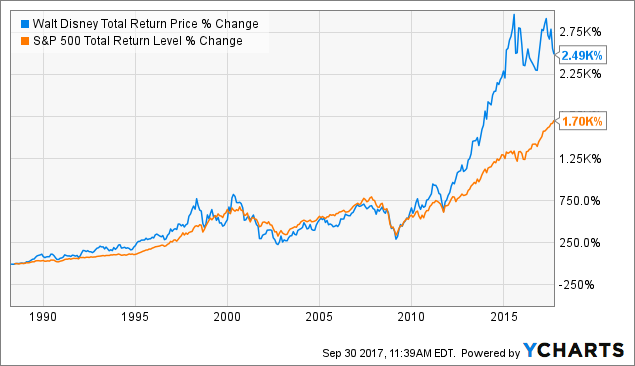
ChartDIS Total Return Price data by YCharts

In other words, “is this time really different”, or will a company that has managed to enrich investors with decades of market crushing total returns persevere and overcome its obstacles and continue its long-term success.

In the case of Disney’s recent 14% slide, there are two main negative factors driving the share price lower.

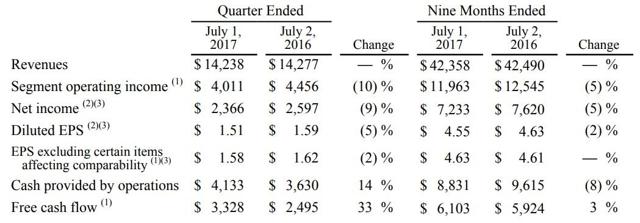
Source: Earnings Release

I’ll admit that Disney’s earnings performance to date is lackluster at best, with flat revenue and free cash flow (YTD), and declining EPS, despite buying back 3% of its shares in the past year.

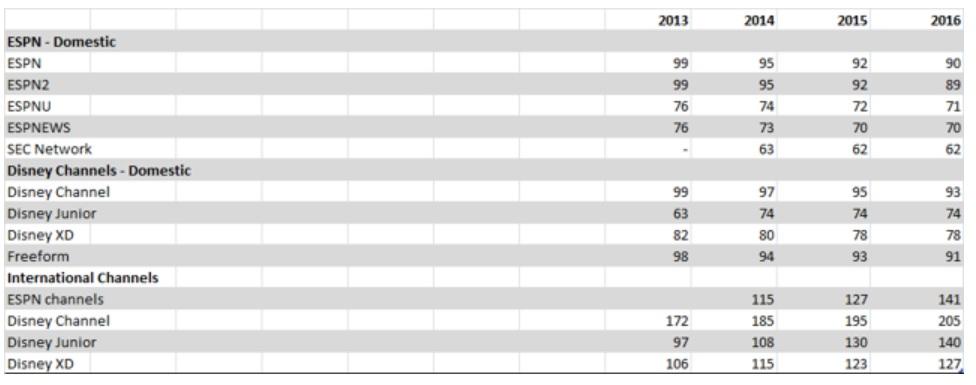
Those poor results are largely being blamed on the media segment, specifically troubles at ESPN, which has seen steadily falling subscribers in recent years.

Source: Kenra Investors

In addition, ESPN has faced rising content costs, in order to maintain its dominant position in live sports (it has exclusive rights with the NFL and college football), which has been badly hurting that segment’s bottom line.

Disney has been able to offset this decline somewhat by raising its cable fees, but now Altice USA (ATUS), the nation’s fourth largest cable company (with 5 million subscribers), is challenging Disney’s pricing power.

Specifically, Disney is asking Altice for $ 100 per subscriber per year ($ 8.30 a month) for its total ESPN content, which is a 10% increase over the current average ESPN subscriber fee of $ 7.54.

Understandably the market is concerned that Altice won’t pony up the dough, given that ESPN’s popularity is flagging (potentially due to increased political content on the air which can alienate viewers), sports ratings are down, and ESPN itself is facing a challenging turnaround; having recently let go a significant amount of its on air talent.

And while Altice by itself represents a small contract dispute, Disney investors are worried that should it back down and discount its content that would serve as poor precedent in future negotiations with much larger cable companies.

This Is Why Wall Street Is Wrong

The market’s huge focus on ESPN is likely overblown given that it ultimately represents about 12.5% of Disney’s total revenue.

In addition, Disney is making the right call by launching an ESPN streaming service in 2018, though only time (and pricing) will tell whether or not it will be able to stabilize the brand’s bottom line.

However, to truly understand Disney’s growth potential requires looking at its other segments, such as the wildly successful studio segment.

Of course, we need to keep in mind that some of Disney’s business segments, especially its studios, are highly cyclical due to the lumpy nature of the movie business.

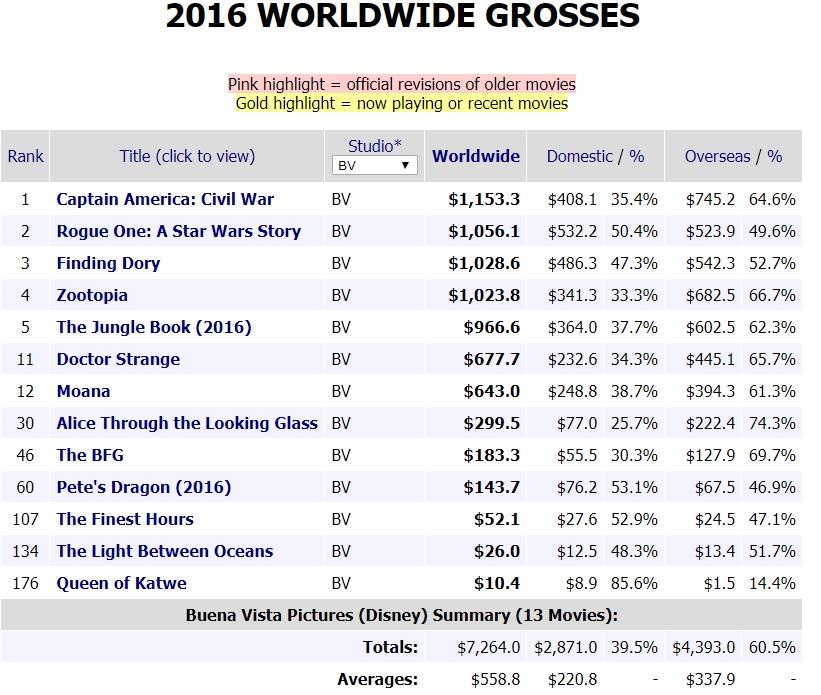
For example, 2017’s large YTD decrease in studio revenue and earnings isn’t necessarily a sign that Disney has lost its mojo, but rather that 2016 was a triumph, where the company’s especially large number of films released dominated the global box office.


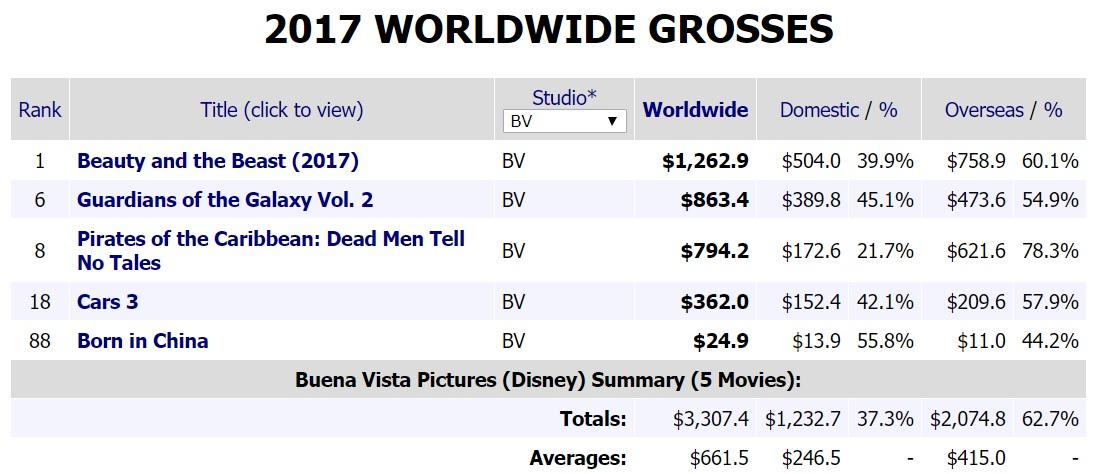
Source: Boxofficemojo

For example, in 2017, there have been far fewer films than last year.

Yet even before Disney releases: Thor: Ragnarok, Star Wars: The Last Jedi, and Pixar’s Coco, it still boasts three of the top 10, and four of the top 20 movies of the year so far. In addition, on a per movie basis, Disney is actually doing better than last year.

And given the historical track record of how well Star Wars, Marvel, and Pixar films do internationally, it’s likely that Disney can expect around $ 2.5 to $ 3 billion combined from these remaining releases, and further domination of the global box office (six of the top 10 and seven of the top 20 releases this year). In fact, once these three likely major blockbusters come out, Disney’s 2017 average box office per film should rise to about $ 725 to $ 750 million, far higher than its record 2016 haul.

And the long-term view is similarly bright as Disney benefits not just from Star Wars and Marvel franchises but also Pixar, Disney Animation, and the continuing trend of live action remakes of its most popular animated classics (including this year’s most popular global movie Beauty and The Beast).

Add to this the fact that Disney’s cable networks are seeing strong international growth, and it’s obvious that, while the domestic market will always be important, Disney’s true growth prospects lie in its dominance overseas, especially in faster growing emerging markets such as India and China.

This also applies to its booming parks segment, which saw successful openings of Shanghai Disney Resort and and improved performance of Disneyland Paris, spurring impressive 17% earnings growth for the division.

According to Technavio, the amusement park industry is set to grow 11% CAGR through 2021, and Disney is well situated to gain a fair amount of this business thanks to continued expansion and revamping of its properties, including the recently opened Pandora World Of Avatar attraction at its Animal Kingdom, plus dozens of new attractions outlined by the D23 plan:

  • Star Wars: Galaxy’s Edge, part of Disneyland and Disney World Hollywood Studios, opening 2019 and featuring two feature rides, the Millennium Falcon, and Star Wars battle experience.
  • Guardians Of The Galaxy ride at California Adventure will be expanded into a full fledged Marvel Land.
  • Star Wars Luxury Resort: the company’s “most experiential concept ever,” a starship themed hotel where every window has a view of space.
  • Major upgrade of Epcot including: a highly upgraded Future World, a Guardians Of The Galaxy ride, and a Ratatouille attraction in the French pavilion, a Mission to Mars ride, and a space themed restaurant.
  • An intense roller coaster Tron ride next to Star Wars Hotel in Magic Kingdom, as well as a new theater and show in that park.
  • Toy Story Land in Hollywood Studios.
  • New Disney Riviera Resort near Epcot, part of the exclusive Disney Vacation Club.
  • Pixar Land at Disney World California Adventure.
  • New York Hotel in Disneyland Paris to be rebranded and refurbished as a Marvel based resort.

In other words, Disney, which operates seven of the top 12 and 12 of the top 25 most visited theme parks in the world, will continue to dominate this growing and highly lucrative industry.

And let’s not forget that while the consumer segment has been having a down year (due to tough comps), Disney is a legend at monetizing its brands through licensing and toys. This segment should continue to grow in the coming decades (about 6% a year according to analysts such as Morningstar’s Neil Macker); especially thanks to the company’s popularity in emerging markets.

Finally, while there is no guarantee of success, should the GOP tax reform plan pass, then Disney is likely to benefit immensely from the lowering of corporate tax rates to 20%.

That’s because the company’s TTM effective tax rate was 32.8%. Thus, should that rate drop to 20%, then Disney’s bottom line (EPS and FCF) would grow by an impressive 39%; something the stock is clearly not pricing in right now (forward PE would drop to 11.1).

Long-Term Dividend Profile Makes Disney An Income Investor’s Dream

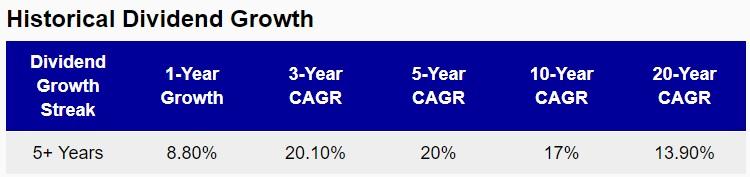
Disney has an impressive record as a fast dividend grower.

Source: Simply Safe Dividends

Company Yield TTM FCF Payout Ratio 10-Year Projected Dividend Growth 10-Year Projected Annual Total Return
Disney 1.6% 27.6% 7.9% to 10% 9.5% to 11.6%
S&P 500 1.9% 39.5% 5.9% 9.1%

Sources: Gurufocus, Fast Graphs, Factset Research, Multipl.com, Moneychimp.com

However, I’m sure that many readers will take one look at Disney’s low yield and reject it as an income investment.

I understand that, and in fact, I agree that if you are someone looking to live off dividends in retirement, and have 10 years or less before you plan to exit the labor force (or a retired now), then indeed Disney likely isn’t for you.

However, if you have 10+ years to let the company compound its payout, then it’s actually an excellent income investment. That’s especially true given the rock solid dividend safety (strong balance sheet and low payout ratio), and solid prospects for long-term double-digit dividend growth.

Years Projected Inflation Adjusted Yield On Invested Capital
5 2.35%
10 3.45%
15 5.10%
20 7.45%
25 11.0%
30 16.1%
35 23.65%
40 34.75%
45 51.1%
50 75.0%
55 110.25%
60 162.0%
65 238.05%
70 349.75%
75 514.0%

For example, assuming a conservative 10% long-term dividend growth rate (not unrealistic given that Disney’s 30-year dividend CAGR is 17.3%), and 2% inflation rate, then Disney shares bought today, if given enough time to compound, can become a fantastic retirement stock.

The key is to start as early as possible, meaning that if you are young and just starting out saving and investing (in your 20’s), then 40 to 50 years of dividend growth compounding can greatly help ensure your financial future.

And if you are planning to have children (as I am eventually), then I recommend you consider buying some Disney stock for them, because such a gift, with potentially 70 to 75 years of compounding time could wind up incredibly valuable. This is both as an income source or an asset that can be sold and the funds allocated elsewhere, such as higher-yielding stocks if they so choose.

One Of The Few Stocks Trading At Fire Sale Prices Right Now

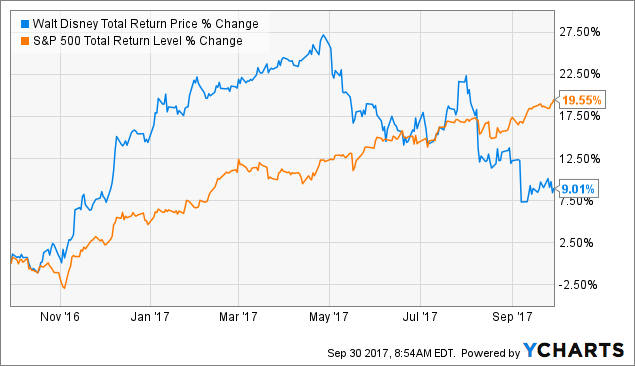
ChartDIS Total Return Price data by YCharts

Thanks to its recent weakness (a 14% decline of its recent high), Disney has underperformed the market by about 11% in the past year. However, that just creates a potentially excellent buying opportunity.

Company Forward PE Historical PE Yield Historical Yield
Disney 15.4 17.2 1.6% 1.2%
Industry Median 22.9 NA 1.8% NA

Source: Gurufocus

After all, when we compare the company’s forward PE ratio to either that of its peers, or its own historical norm, we find Disney highly undervalued.

That’s only more so if we consider the most important valuation metric to dividend investors, the yield, and where it stands in comparison to its usual levels.

Source: Yield Chart

For example, while a 1.6% yield isn’t necessarily high in and of itself, the fact remains that over the past 22 years, Disney’s yield has only been higher about 7.5% of the time.

In my book, that makes this dividend growth stock highly appealing, especially given the company’s wide moat and “buy and hold forever” nature.

But of course, all such backwards looking valuation metrics have a major flaw, which is that all profits are derived from the future.

Which is why my favorite valuation metric for dividend growth stocks is a discounted free cash flow or DCF analysis.

TTM FCF/Share Projected 10-Year FCF/Share Growth Rate Fair Value Estimate Growth Baked Into Current Share Price Margin Of Safety
$ 5.40 6.9% (conservative case) $ 140.17 2.4% 30%
9.3% (likely case) $ 169.17 42%
11.2% (bullish case) $ 196.22 50%

Sources: Fast Graphs, Gurufocus, Morningstar

Basically, the idea is that a company’s fair or intrinsic value is the net present value of all future free cash flow.

I use a 9.0% discount rate because that is the opportunity cost of money. Specifically, the S&P 500’s (the best default alternative to any individual stock) historical 9.07% return, net of expense ratio for a low cost ETF, can realistically be expected to generate 9.0% total returns.

Such an analysis shows that even using conservative FCF/share growth estimates, Disney is incredibly undervalued, thanks to the market pricing in essentially flat FCF/share growth forever.

However, I find this a ludicrously pessimistic assumption given this growth rate is about 50% below the global economy’s growth rate, and Disney’s strong international opportunities mean it’s virtually certain to clear this very low performance bar.

In other words, Disney now offers one of the largest margins of safety for a Grade A (low risk) quality company that you’ll find in this overheated market.

Risks To Keep In Mind

While I am bullish on Disney in the long term, there are several short- to medium-term risks to keep in mind.

First, ESPN, which represents 25% of Disney’s FCF, is likely to continue struggling in the face of ongoing cord-cutting and declining sports ratings. Worse yet, sports programming costs are only going to make things worse for now as Disney recently had to renew its contracts with the MLB, NBA, and NFL by almost $ 2 billion a year.

Which means that ESPN, which the market is obsessing over right now, will continue to be a drag on the company’s growth, and could result in further share price weakness.

Now personally, I would love for further opportunities to add to my position at lower prices; however, if the price falls too low, then activist investors could step in and lobby for a selling or spinning off of ESPN; something media deal making legend John Malone has recommended.

The risk of such a sale could be especially high in mid-2019, since CEO Bob Iger is set to retire at the end of July of that year. His successor could feel pressure to “do something” and sell ESPN.

That in turn would slash FCF/share and could greatly impair Disney’s ability to grow its dividend at its historically high rates.

And speaking of Iger stepping down, we can’t forget the succession risk that will come with a new CEO, whoever that may be. Personally, I’m confident that Disney’s fourth extension of Iger’s contract to give them more time to prepare and groom a worthy successor means the company will continue on a similar trajectory once the man is gone.

Finally, we can’t forget that the entertainment world is constantly shifting, with changing consumer tastes and new disruptive technologies.

While Disney’s $ 2.6 billion purchase of 75% of BAMtech, ahead of its launching of its own streaming service in 2019 may end up generating a strong recurring revenue stream, UBS has estimated that Disney would need 32 million subscribers to break even at $ 9 per month.

In the meantime, the company will have to increase its capital spending to build its streaming service, and upon its launch, forgo $ 500 million it’s currently getting from licensing its content to other companies such as Netflix (NFLX).

Given the market’s short-term focus, any missteps in launching its streaming services could put further downward pressure on the stock in 2019, and further fuel calls for potentially knee-jerk reactions from the new CEO (unless Iger’s contract is extended for the firth time).

Bottom Line: Disney’s Unbeatable Brands Own The Future Of Entertainment And The Current Price Is Too Good To Pass Up

Don’t get me wrong, I’m not saying that Disney’s shares are certain to rise in the short term because markets can remain irrational for long periods of time.

However, if you are, like me, a value focused dividend growth investor, with a time horizon of 10+ years, then today Disney shares represent one of the most undervalued grade A opportunities you can find in this otherwise overheated market.

Which is why, when I saw Disney within 5% of its 52-week low recently, I took the opportunity to add it to my own portfolio, and recommend you consider doing the same.

Disclosure: I am/we are long DIS.

I wrote this article myself, and it expresses my own opinions. I am not receiving compensation for it (other than from Seeking Alpha). I have no business relationship with any company whose stock is mentioned in this article.

Tech